

ECICE2026

Keynote speakers

Select a talk title to read the abstract.

Ji-Wang Yan

Ji-Wang Yan

Professor, Faculty of Science and Technology, Keio University
Specially Appointed Professor, Tokyo Institute of Technology

Ph.D. in Mechatronics and Precision Engineering, Tohoku University, Japan, 2000.

Abstract

Micro-, nano-, and meso-scale surface structures can significantly modify the surface properties of materials and offer great potential for high-value manufacturing. However, the fabrication of such cross-scale surface structures presents multiple technological challenges, particularly in achieving both high precision and industrial productivity. This talk will focus on state-of-the-art technologies for cross-scale surface structuring based on interdisciplinary processing methodologies. Recent research and development examples will be introduced, including macro, micro and nano multiscale surface structuring using tool-servo-driven and/or vibrated diamond cutting tools, micro/nano hybrid surface structuring by ultrafast laser processing, and surface replication processes such as press molding and imprinting. Potential industrial applications of these cross-scale surface structuring technologies include light manipulation, wettability control, reduction of fluid resistance, friction control, interfacial bonding, and mold release enhancement. Future trends, opportunities, and challenges in this field will also be discussed.
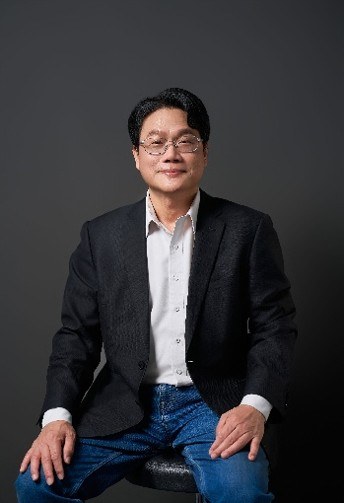
Meng-Shiun Tsai

Meng-Shiun Tsai

Distinguished Professor, Department of Mechanical Engineering, National Taiwan University

Ph.D. in Mechanical Engineering, The Pennsylvania State University, USA, 1998.

Abstract

This speech consists of two parts. The first part presents a generative AI–based approach to the automatic generation of CAM/CNC toolpath programs. First, 2D DXF drawings and 3D STEP models are provided as inputs to a large language model (LLM) fine-tuned using Low-Rank Adaptation (LoRA) and function-calling to identify machining features, dimensions, tolerances, and other relevant information. The extracted information is subsequently converted into a standardized data format. A LangChain-based framework is then employed to establish a progressive process-reasoning chain. Combined with dynamic prompt routing, the framework integrates expert knowledge, including cutting parameters and interference constraints, to guide the LLM in performing feature verification, operation sequencing, machining-method selection, and cutting-tool assignment. The system subsequently generates ISO-compliant CNC control code. Simulation results demonstrate that the generated toolpaths are consistent with practical machining procedures and satisfy machining safety requirements.

The second part explores the application of LLMs to autonomous mobile robots. By integrating LLMs and vision-language models (VLMs) with a hierarchical closed-loop architecture based on ROS 2, users can assign pick-and-place tasks to the robot through spoken instructions. The proposed system is evaluated in terms of instruction-to-task mapping, visual localization, inference latency, and dynamic obstacle avoidance. The results demonstrate the controllability, resilience, and maintainability of the robotic system in executing autonomous navigation and manipulation tasks.